2014–2024
Coffee chemistry and safety research program
Long-running research line on caffeine, polyphenols, antioxidant activity, mycotoxins, sensory quality and NIR spectroscopy with chemometrics in Panamanian coffee.
Center for Research in Natural Resources · UNACHI
Research center of the Universidad Autónoma de Chiriquí devoted to biotechnology applied to the rational and sustainable use of the natural resources of western Panama.
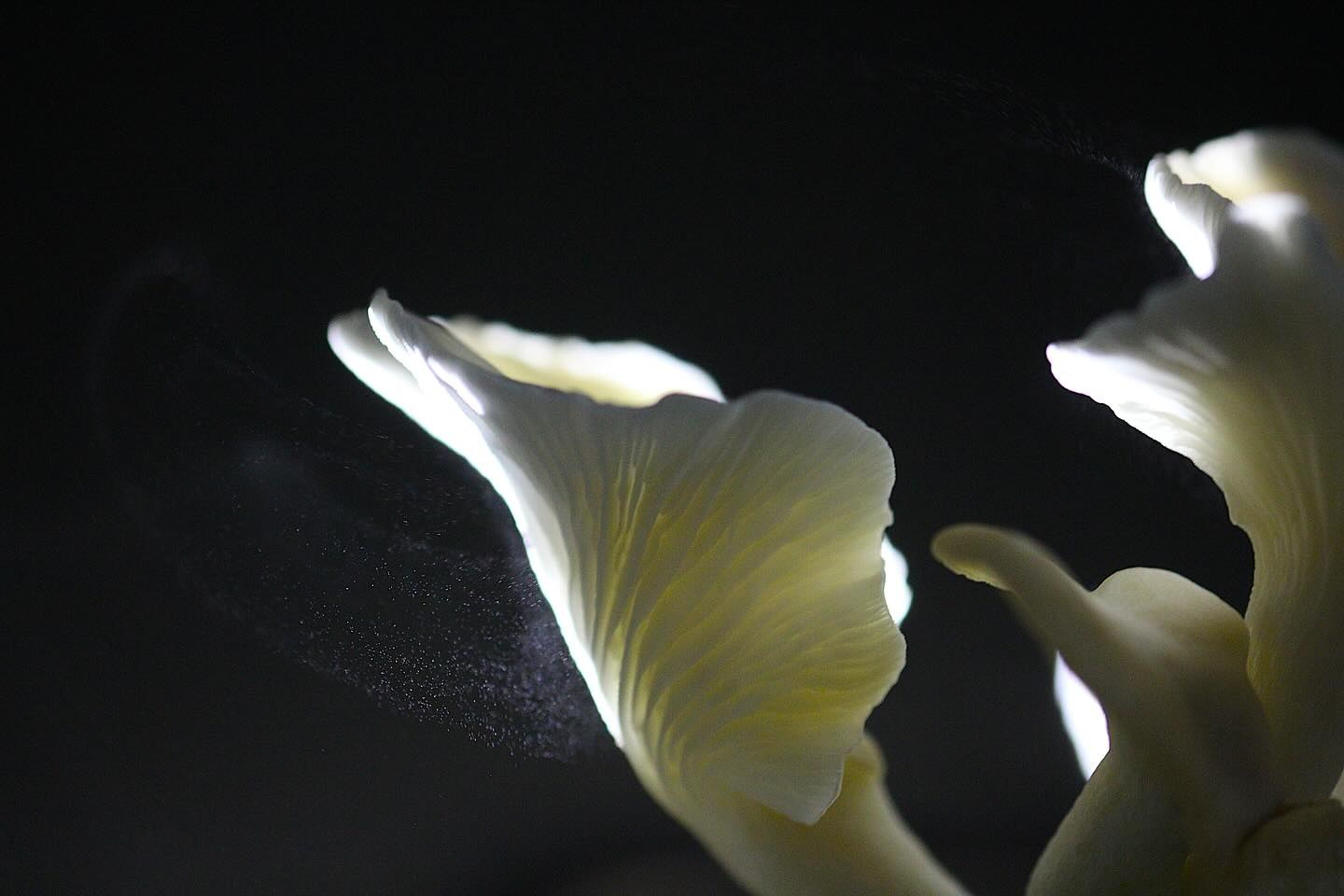
"Esporas al viento", photograph by Stephany Reyes — first prize, FotoCiencia 2025, SENACYT.

2006 – 2026
20 years as a research center
What CIRN is
CIRN studies the natural resources of western Panama — its fungal biodiversity, its coffee, its agro-industrial residues and the safety of its food — and turns that knowledge into use for the region that produces them.
To generate knowledge on the use of natural resources through biotechnological research, specialized analysis of raw materials, technical advisory services and technology transfer to producers in the agro-industrial sector.
Research pillars
Four research pillars, from the chemistry of a coffee bean to the public policy that protects the territory where it grows.
Quality, chemistry and traceability of Panamanian coffee: NIR spectroscopy, chemometrics, sensory analysis, bioactive compounds and geographic origin.
→Edible fungi, Panamanian fungal biodiversity and biotechnological valorization of agro-industrial residues.
→Mycotoxin detection and dietary exposure assessment in coffee, rice, raw milk and animal feed.
→Sustainable use of natural resources and biodiversity conservation in western Panama, with policy-oriented work through the Think Tank UNACHI centre of thought.
→People
A small team of chemists, biologists and mycologists based in David, Chiriquí.
Founder & Director · Researcher, National Research System (SNI) I
She founded the laboratory that became CIRN in 1997 and has directed the centre since its institutionalization.
→Researcher · Specialized laboratory analyst (supervisor) · Think Tank team leader
He works on the valorization of natural resources and on the taxonomy and ecology of ascomycete and basidiomycete fungi from the mountainous and rainy tropical zones of western Panama.
→Researcher · Specialized laboratory chemical analyst
She is a co-author of the centre's work on coffee, edible mushrooms and mycotoxins.
→Team member · Assistant specialized laboratory analyst
She takes part in the natural-resource valorization projects and in studies of edible mushrooms and of mycotoxins in coffee beans, milk and grains for human consumption.
→CIRN team member · Think Tank UNACHI
She takes part in the activities and projects of the Think Tank UNACHI centre of thought, run by CIRN, within its work on sustainability in the use of natural resources and biodiversity conservation in western Panama..
→Projects
Field and laboratory research carried out by the centre.
Long-running research line on caffeine, polyphenols, antioxidant activity, mycotoxins, sensory quality and NIR spectroscopy with chemometrics in Panamanian coffee.
Project that produced a scientific article and a technical manual.
Internships, activities and outputs of the UNACHI-CIRN Think Tank.
Graduate research applying NIR spectroscopy and chemometric tools to the analysis of caffeine, protein and fat in specialty green coffee from Chiriquí.
Publications
Peer-reviewed articles, repository records and theses produced by the centre.
Aracelly Vega · Stephany M. Reyes · Roberto Quiroz · José M. Gallardo · María E. Ruiz · Pedro Gonzalez Beermann
PublishedGiselle Aracelly Gómez Gallardo · Aracelly Vega
PublishedKilmara Ábrego-González · Abdy Morales · Hugo A. Sánchez-Martínez · Maricselis Díaz · Aracelly Vega · Juan A. Morán-Pinzón · José Luis López-Pérez · Esther Del Olmo · Estela Guerrero De León
PublishedAracelly Vega · Carlos Alvino Rovetto · et al.
Published@cirn_unachi
What is happening at the centre right now.
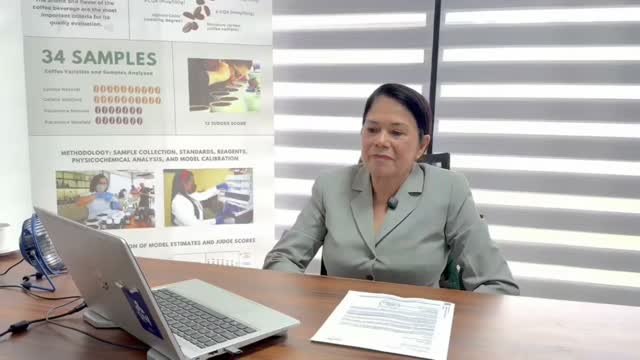
Dr. Aracelly Vega presented the project "Panama in Action: science, biodiversity and environmental sustainability in coffee-growing production systems" at the meeting convened through MICI's International Trade Negotiations Office.
See the original post ↗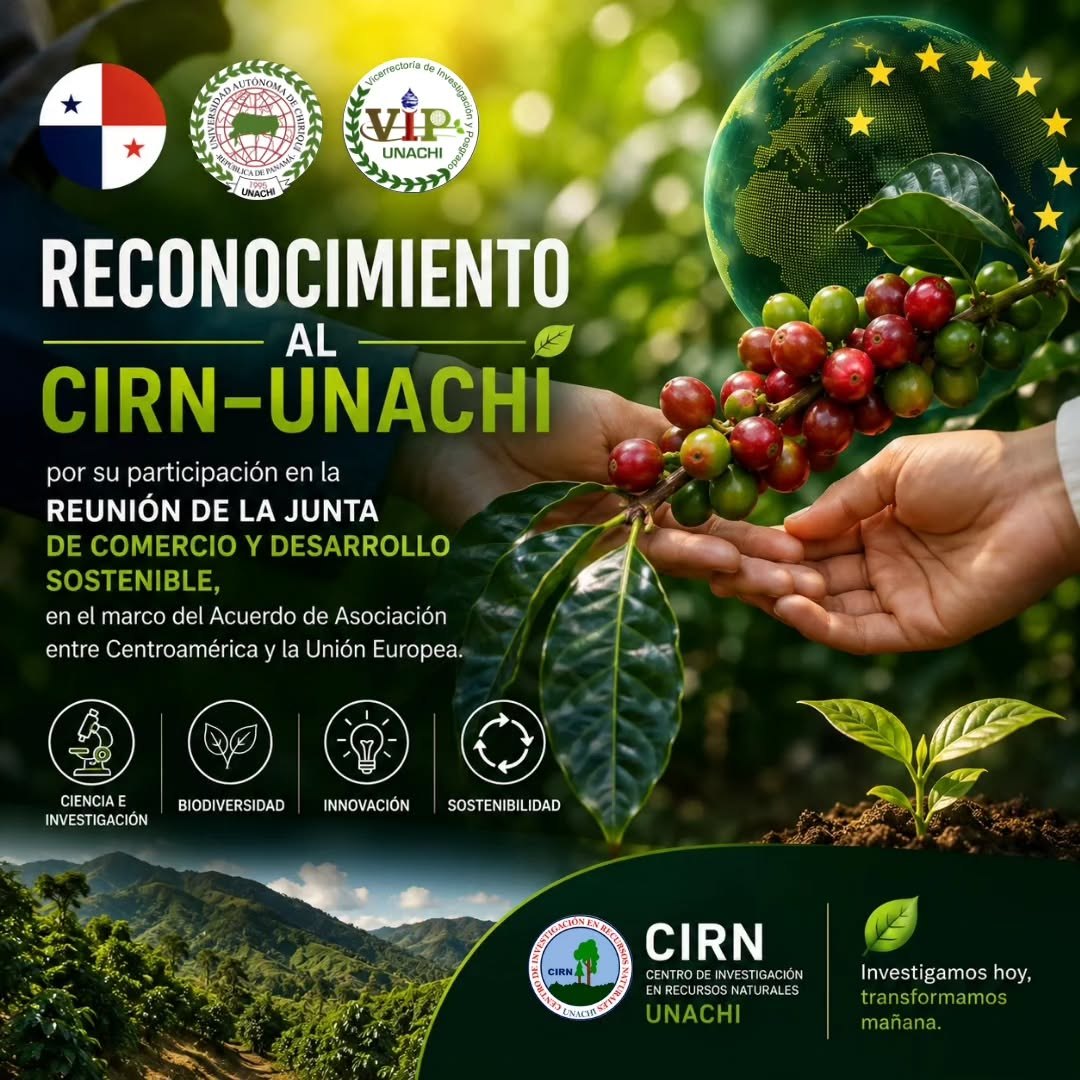
The Ministry of Trade and Industry recognized CIRN for its participation in the Trade and Sustainable Development Board, under the Association Agreement between Central America and the European Union.
See the original post ↗Joint work by CIRN, IDIAP-Río Sereno, CENICAFÉ of Colombia and local coffee growers to implement coffee quality traceability using advanced analytical techniques.
See the original post ↗Collaborations
Institutions the centre works with: organisations that fund its projects, research partners, and institutions that host its researchers.